Sympany

Autonomous sorting with AI for a circular textile chain
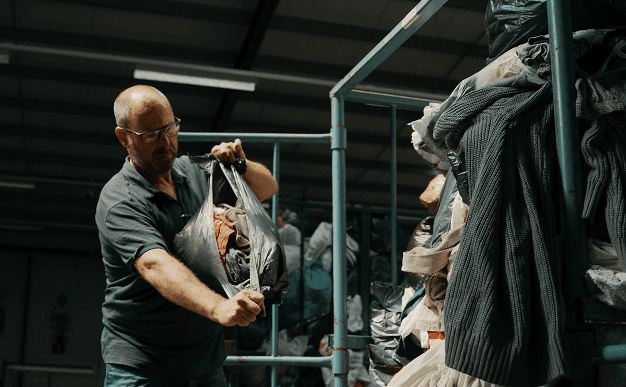
Sympany's textile sorting facility, as the main image for the customer case study on AI for a circular textile chain.

The challenge: pollution from textiles on a global scale

The textile industry is among the most polluting sectors in the world. Every year, millions of tonnes of clothing end up in landfills or incinerators, while valuable materials are lost. Much of the collected textile cannot be efficiently reused or recycled, because sorting is largely manual and prone to error. Furthermore, reliable data on the composition and quality of textiles is lacking, making circular processing difficult to scale up.
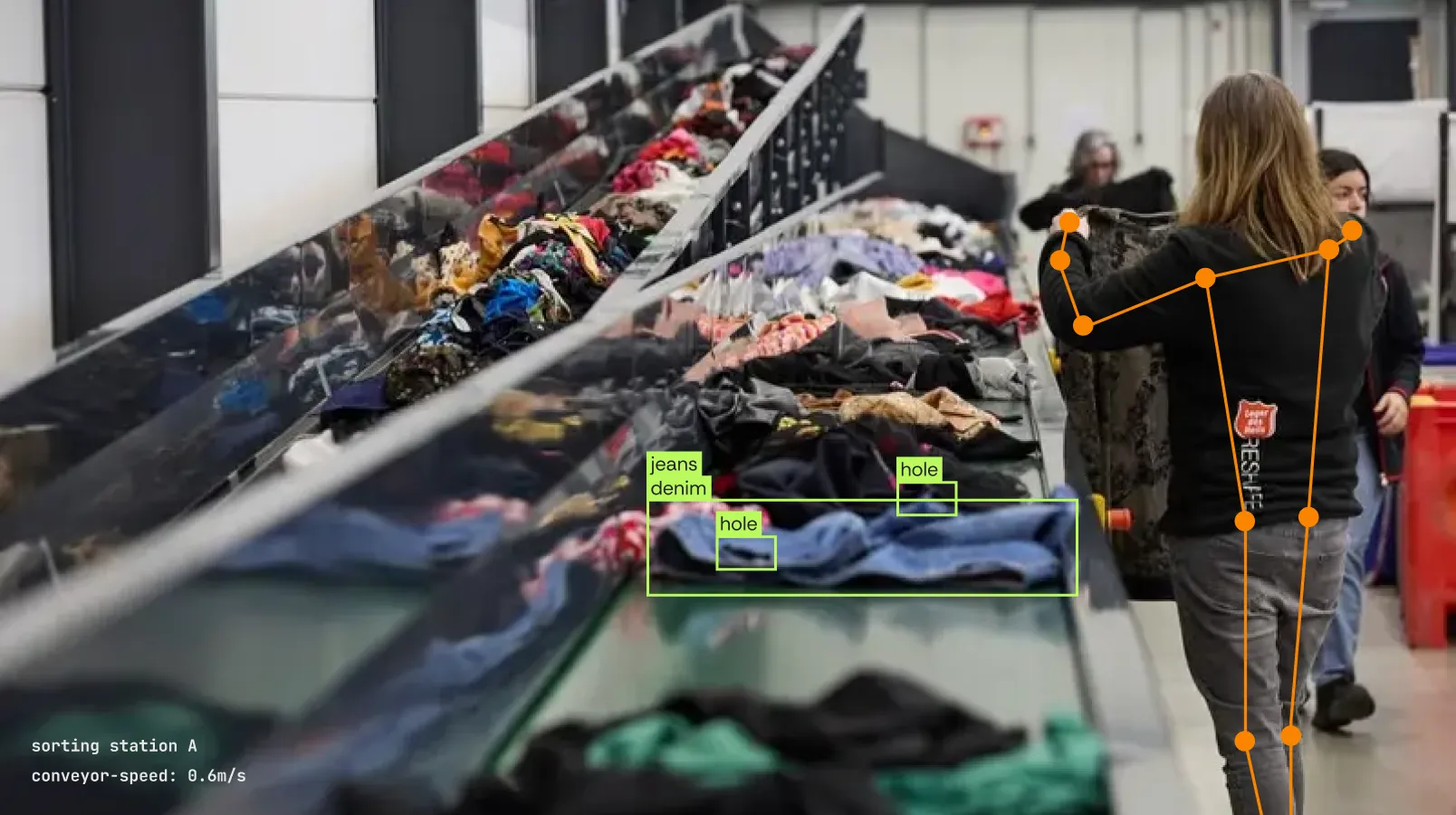
Conveyor belt with colourful textiles at Sympany where AI helps to sort garments and materials.

The solution: autonomous sorting with AI

Within the S3ORTED initiative, we are developing AI that autonomously makes sorting decisions for the reuse and recycling of textiles. We do this for both mechanical and chemical recycling. Through the use of vision and sensor technology, we identify garments, materials, and their condition, and link this information directly to the correct processing route. This is how we make sorting faster, more accurate, and scalable. By means of machine learning, our models improve themselves, ensuring that each sorting decision yields more knowledge and precision than the last.

Conveyor belt with colourful textiles at Sympany where AI helps to sort garments and materials.

The solution: autonomous sorting with AI

Within the S3ORTED initiative, we are developing AI that autonomously makes sorting decisions for the reuse and recycling of textiles. We do this for both mechanical and chemical recycling. Through the use of vision and sensor technology, we identify garments, materials, and their condition, and link this information directly to the correct processing route. This is how we make sorting faster, more accurate, and scalable. By means of machine learning, our models improve themselves, ensuring that each sorting decision yields more knowledge and precision than the last.

Conveyor belt with colourful textiles at Sympany where AI helps to sort garments and materials.

The solution: autonomous sorting with AI

Within the S3ORTED initiative, we are developing AI that autonomously makes sorting decisions for the reuse and recycling of textiles. We do this for both mechanical and chemical recycling. Through the use of vision and sensor technology, we identify garments, materials, and their condition, and link this information directly to the correct processing route. This is how we make sorting faster, more accurate, and scalable. By means of machine learning, our models improve themselves, ensuring that each sorting decision yields more knowledge and precision than the last.

An employee of the Salvation Army ReShare inspects clothing on a conveyor belt full of colourful textiles in the Sympany sorting hall.
Sorted clothing and textile flows at Sympany as a basis for reuse and recycling.

The impact: on the way to a circular textile chain

Together with partners such as Sympany, we are translating this technology into practice. Through AI-driven sorting, textiles are more accurately separated, ensuring every material reaches the right destination. This not only results in less waste, but also provides valuable data to make the entire chain smarter. In this way, we are building step by step towards a future where textiles are no longer wasted, but continuously regain value.

Sorted clothing and textile flows at Sympany as a basis for reuse and recycling.

The impact: on the way to a circular textile chain

Together with partners such as Sympany, we are translating this technology into practice. Through AI-driven sorting, textiles are more accurately separated, ensuring every material reaches the right destination. This not only results in less waste, but also provides valuable data to make the entire chain smarter. In this way, we are building step by step towards a future where textiles are no longer wasted, but continuously regain value.

Sorted clothing and textile flows at Sympany as a basis for reuse and recycling.

The impact: on the way to a circular textile chain

Together with partners such as Sympany, we are translating this technology into practice. Through AI-driven sorting, textiles are more accurately separated, ensuring every material reaches the right destination. This not only results in less waste, but also provides valuable data to make the entire chain smarter. In this way, we are building step by step towards a future where textiles are no longer wasted, but continuously regain value.

“The collaboration with Code for Good has demonstrated how powerful AI can be. By making better use of our data, our productivity has increased significantly.”

Portrait of Charles Graft.

Charles Graft

Managing Director - Sympany

Discover how AI and data make your business smarter, faster and more sustainable.

Discover how AI and data make your business smarter, faster and more sustainable.

Discover how AI and data make your business smarter, faster and more sustainable.